Shuguang Han teaches Chinese in two buildings and advises the Asian American Association at ARHS
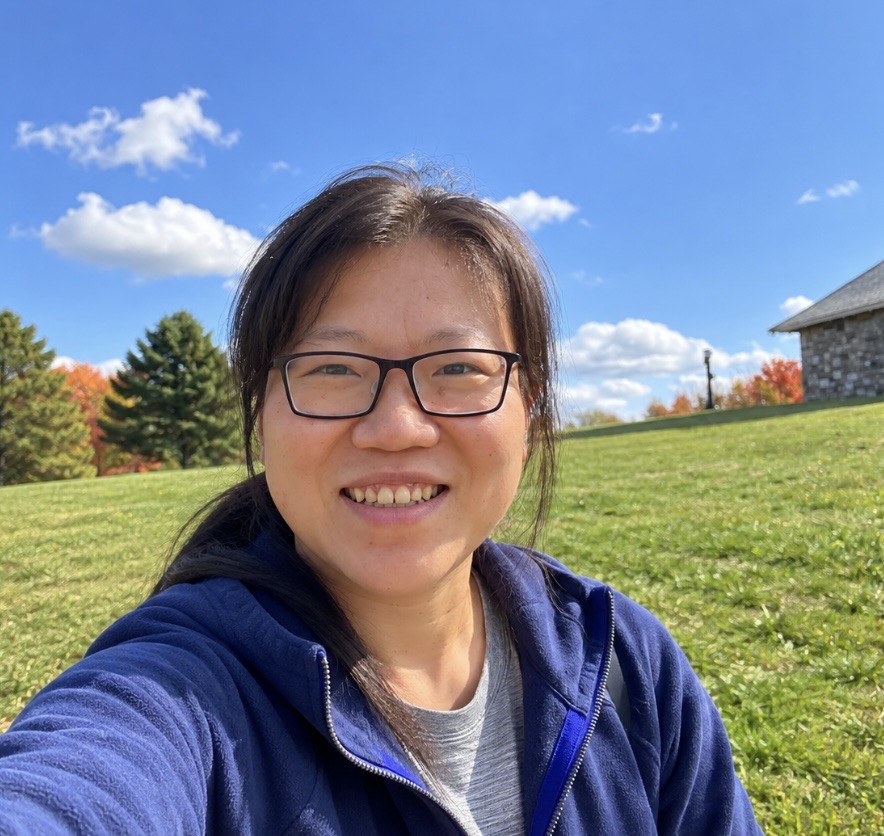
Shuguang Han is the new Chinese teacher at ARHS and ARMS. Currently, she teaches Chinese 1a and Chinese 1b at the middle school and Chinese 2 through AP level at the high school. She is also the new advisor to the Asian American Association, a student club at ARHS.
“My job involves planning lessons, teaching speaking, listening, reading, and writing, assessing students’ progress, and helping students understand Chinese culture as well as the language,” she said.
Being the only Chinese teacher in two schools isn’t easy, though. “Since I am new to the position, I am also constantly learning how everything works,” said Han. And because she is teaching at both ARHS and ARMS, her schedule is often quite booked. “My days are pretty busy,” said Han. “I teach at both the high school and middle school, so I sometimes travel between the two buildings during the school day.”
But this pinballing between two schools doesn’t stop her from playing an active role in her students’ learning. Han cares deeply about her students’ education and still makes time to ensure each student’s learning is personalized.
“I often differentiate instruction. Some students are just learning pinyin and basic characters, while advanced students are working toward more complex communication,” she said.
Education is very important to Han’s own life as well. In addition to teaching, Han is pursuing her Master of Education in Bilingual, ESL, and Multicultural Education at UMass Amherst. “I love learning, so education has become an ongoing part of my life,” said Han.
Han’s path to becoming an educator has been circuitous. At first, she worked in the pharmaceutical industry, studying Pharmaceutical Engineering and English while living in China. “Earlier in my career, I also worked in other fields,” Han said. “My career path has definitely not been a straight line!”
Han has also traveled to many different parts of the world, and she has lived in five different countries. “Those experiences have shaped how I think about language, culture, and education,” she said.
But it wasn’t until she moved to the US and began working as an ELL paraprofessional in the Amherst school system that she fell in love with teaching. “I discovered how much I enjoyed helping students learn,” said Han. “Working directly with students made me realize that education was something I wanted to pursue professionally.”
Han’s mission as an educator is to “create a classroom where students feel safe, respected, challenged, and willing to take risks,” Han said. She believes that learning requires making mistakes, and doesn’t want the thought of getting something wrong to prevent them from trying. “I want them to develop confidence, curiosity, and the ability to communicate with people from different cultures,” Han said. “I want the club to be a place where students can bring their ideas, share their cultures, organize activities, have conversations, and learn from one another.”
Han believes that this idea of learning about different cultures is a very important part of learning Chinese. “Chinese is about much more than teaching vocabulary and grammar. Language is connected to history, culture, identity, literature, food, traditions, and ways of thinking.”
But as a lifelong learner, in Ms. Han’s classroom, learning about new cultures doesn’t just stop with the students. Han believes that each student brings unique and valuable cultural experiences and knowledge to her classroom. “My job is not simply to teach them; it is also to learn who they are,” said Han.
Culture and community are two ideas that are very important to Han, both of which were core motivators in Han’s decision to lead the Asian American club. “As an Asian educator and someone who grew up in China before living in different countries and eventually settling in the United States, I understand how meaningful it can be to have a space where students can talk about culture, identity, language, family, and their experiences,” said Han.
To her, being the advisor of the club isn’t about making all the decisions for the group members; it’s more about creating a space where they all think their voices matter.
Han said that her favorite thing about the ARHS community is the diversity of the people and communities in ARHS. “Students bring many different backgrounds, languages, identities, interests, and perspectives to the school,” said Han.
Outside of school, Han also has many other obligations; currently, she has a 10-year-old and a 7-year-old daughter, who enjoy doing math, playing the violin, and playing softball. “I’m excited about watching my kids grow and develop their own interests,” said Han.
But it’s not all work, though. Han also has many hobbies and interests. She enjoys reading, traveling, gardening, and spending time with her family, and is excited about “growing the Chinese program and seeing where my students will be by the end of the year. [and] about continuing my graduate studies at UMass,” said Han.
Teaching is also personal to Han; living in the Amherst area allows her to be an active part of the community where she teaches, helping her relate to the situations and experiences of many of her students. “I understand what it feels like to learn and communicate in another language,” said Han. “English is not my first language, and I have lived in several different countries. Those experiences have taught me that language learning takes courage.”
For Han, the biggest part of teaching is seeing her students grow and become better versions of themselves. “[I] love seeing the moment when students realize that they are capable of learning another language. That is very rewarding,” said Han.