Sophomore Oliver Odwazny-Beebe is the star of a moving, powerful film
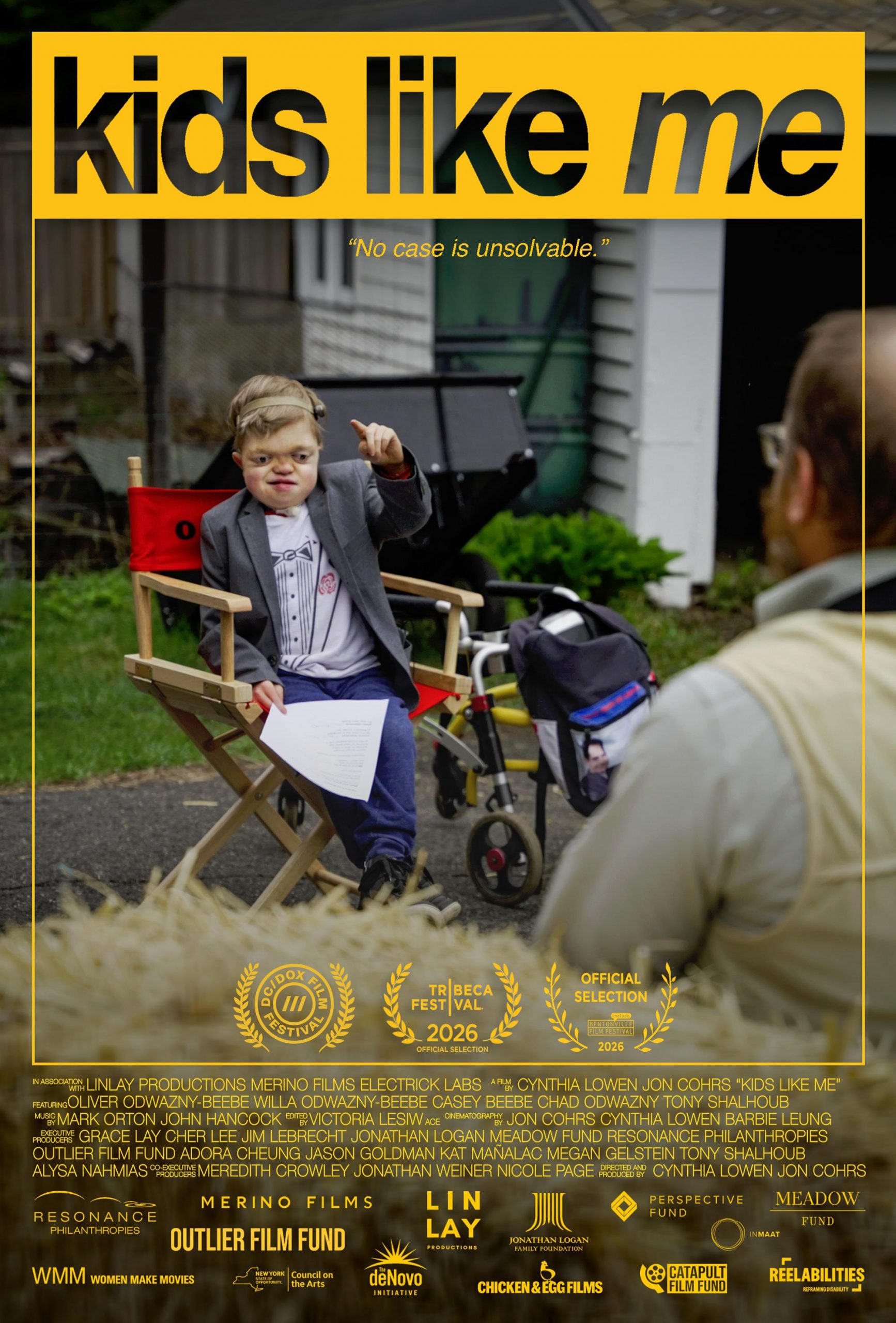
A celebrity at ARHS starred in a documentary film about his life that is currently making its way around the film festival circuit this year.
Produced by Cynthia Lowen and Jon Cohrs, “Kids Like Me” is a fun and truly inspiring film featuring (then) 12-year-old Oliver Odwazny-Beebe, now a sophomore at ARHS and a member of The Graphic, ARHS’s school newspaper.
Oliver has always had a strong passion for murder mysteries, which comes out in this film and also in everyday conversations club members have had with him. He also chose to interview an Amherst police department detective for an issue of the newspaper last year.
Oliver was born with a rare genetic condition, but his disability does not define him; his passions do. The film captures him as he is finishing up his last weeks in sixth grade with graduation right around the corner. His family surrounds him with love and support, and all are aware of Oliver’s passion for solving crime, eventually taking part in a short movie he is directing based on a script he wrote.
The film about him eventually shows him not just as the subject of a documentary but as a director of a murder mystery he wrote, which has a surprise cameo by a real TV and film star, Tony Shalhoub, best known for playing a detective on “Monk.”
Kids Like Me shows Oliver, his sister, and his mom and dad in their everyday life in Montague. From reading books and watching movies to creating his very own stories complete with props and casting, Oliver’s creativity quickly becomes one of the film’s greatest charms.
The film immediately introduces the viewers to Oliver’s world. With the shout of “Action!,” a dummy gets thrown from a window, landing smack on the ground before cutting to the scene with Oliver lying in its place. Fake blood covers his hand, and a bloody rose rests in his palm, a camera pointing towards it.
The beginning scene is dramatic, playful, and engaging, showcasing the imagination that drives Oliver and the film itself. It quickly shows you what the film will be like without actually telling you in words.
At home, shelves and boxes are filled with different books, many related to Monk, his favorite TV series and character. After memorizing the plots of many episodes, Oliver decides that he wants to take the next step: write his own detective story to be filmed movie-style, with his friends and family helping him succeed in this goal.
The film makes a strong impression from the very beginning. I didn’t feel like I was watching a documentary, or anything that was staged; everything felt very natural, like there wasn’t a camera following people around.
The film includes funny conversations between his family and friends, the activities he enjoys in his free time for his own enjoyment, his routine at school, and some sibling arguments. Through showing, rather than explaining, you got to know who Oliver is yourself.
Once the film gets down to the behind-the-scenes of putting Oliver’s movie together, that is especially compelling to watch. You can see how exciting the process is for him, how his ideas turn into something he is able to create with family and friends, and of course, the help of others who specialize in these projects and take their time to help bring Oliver’s vision to life.
As you watch the film, you feel Oliver’s passion; his excitement over props, script readings, watching the scenes being filmed in real life, and the actual snippets from the movie itself that you get to watch after they have gone through editing.
You witness how everyone bonds together and gets into character through trial and error. One of my favorite scenes before the filming of his script shows everyone in his family and their neighbors and friends dressing up for a murder mystery party for Oliver’s birthday, embodying their personalities as well!
The film not only focuses on the mysteries, but it explicitly shows the painful ableism Oliver faces in a world built for nondisabled people. This is particularly true at Oliver’s graduation when accessibility is limited or when anger arises at his sister. Oliver and his sister at times have a complicated relationship, with him feeling that he cannot have the experiences his sister can, while she feels left out as she sees their parents navigating complicated systems in order to make sure Oliver has everything he needs, including making sure he feels a part of any adventure.
Rather than trying to minimize their children’s concerns, the parents do an amazing job of addressing whatever problems come up for their kids in a loving and sensitive way.
However, something that “Kids Like Me” does especially well is that it doesn’t portray Oliver’s genetic condition as the only thing that defines the story. The film acknowledges the challenges in his life and shows how Oliver and his parents navigate them over the years. But it also spends significant time on Oliver’s humor, friends, interests, and ambitions.
It proves, through Oliver’s imagination and determination, that people with disabilities can be visionary, creative directors of their lives and projects, and it highlights their skills. Because of this, after finishing the documentary, you remember Oliver as a 12-year-old who has a strong passion for mysteries, vivid imagination and creativity, perseverance, and a loving support system.
In the end, Kids Like Me is a wonderful documentary because it allows Oliver’s personality to shine through and lead the story. The film encompasses creativity, family, friendship, love, and excitement, while keeping a sense of mystery at its center as viewers see Oliver’s ideas come to life.