Yiping Yan says years teaching Chinese kept her ‘heart young’

After 23 years of working in the Amherst Regional Public School system, being the only Chinese teacher at the high school since 2003, Yiping Yan has decided to retire after the 2025-2026 school year. “I teach all levels from seventh grade to eighth grade to Chinese one, through Chinese AP, and more advanced Chinese, like the Chinese culture and literature class,” she said.
Yan grew up in Shanghai, finishing elementary, middle, high school, and college there before moving to the U.S to get her master’s degree in education. “I was a teacher in China, so I knew I could work well with kids, so when I came here, I found out there was a Chinese program here, so that’s why I became a Chinese teacher here,” she said.
Yan said she liked teaching all her classes and had never had a class she didn’t enjoy. “Sometimes it’s a bit annoying when kids do not behave, but I kind of understand them more since they are kids,” she said.
Being a teacher has shaped her life a lot, specifically her outlook on teenagers. She said that her experience being a teacher helped her to understand more about how her daughter acted when she was a teenager. “When you work every day with young people, they can keep your heart young, and can keep you from thinking about your real age,” she said.
Her biggest challenge throughout her teaching career was having to teach every level of Chinese. “Especially the first kind of 5-6 years, you always feel you don’t have enough time to kind of prepare for each level,” Yan said.
Chinese is a very different language compared to the other languages offered at ARHS, which is something she figured out shortly after she started teaching. It is the only Asian language that the school offers, and especially for the first couple of years, it’s difficult to teach kids how to write Chinese characters. The grammar is also vastly different from English, making it hard to understand. “Kids would always ask me why they would need to repeat writing the same characters over and over again,” she said.
Since Chinese is such a different language from English, her classes are generally smaller, and these smaller classes have allowed her to connect with her students more. Yan said that numerous students have said that Chinese is the class that they feel the most comfortable in. “My students and I kind of become friends, and my classes become like families. Some classes, even after they have graduated, will still keep in touch with each other,” she said.
In contrast to her challenges, she said that her greatest joys while teaching included: whenever students completed their AP exams with a good score, or whenever students showed progress in learning Chinese. “It’s always joyful to run into kids, especially kids whom I taught Chinese in their 7th grade to their senior year in high school, and see them grow up.”
She said students have visited her after taking her classes, then going on to become fluent speakers studying in China or Taiwan.
Yan has also happened to meet parents of kids she taught, who have told her they have gone on to study abroad in Beijing or Shanghai. “Stuff like that always makes me feel like I influenced people’s lives in a good way, teaching people Chinese culture, and it’s always a joy to see that they want to learn more,” she said.
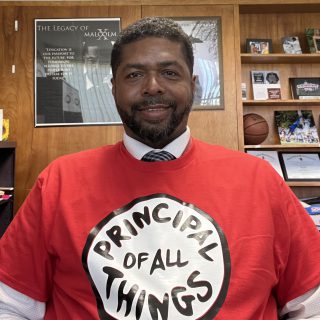
Yan said that she doesn’t know what will happen to the Chinese program at ARHS. She said she hasn’t had time to talk to Principal Talib Sadiq or World Language Department Head Will Roundy about what will happen, but she said she hopes the Chinese program keeps going.
She has decided to at least stay in the area for a few more years since her husband is still working, but also wants to visit China more often. With the extra time Yan wants to knit and garden more. “I like writing, so I don’t know. I might try,” she said.
The last thing she wanted to tell her students was to always be positive even during difficulties, and to remember especially for her high school students that in their lives they will always have challenges.
“When you look back, you won’t think that challenge was a big deal. If you have difficulty or have a challenge, try to solve it and if you can’t, try to find someone to help you,” she said.