An icon retires: Mary Custard looks back
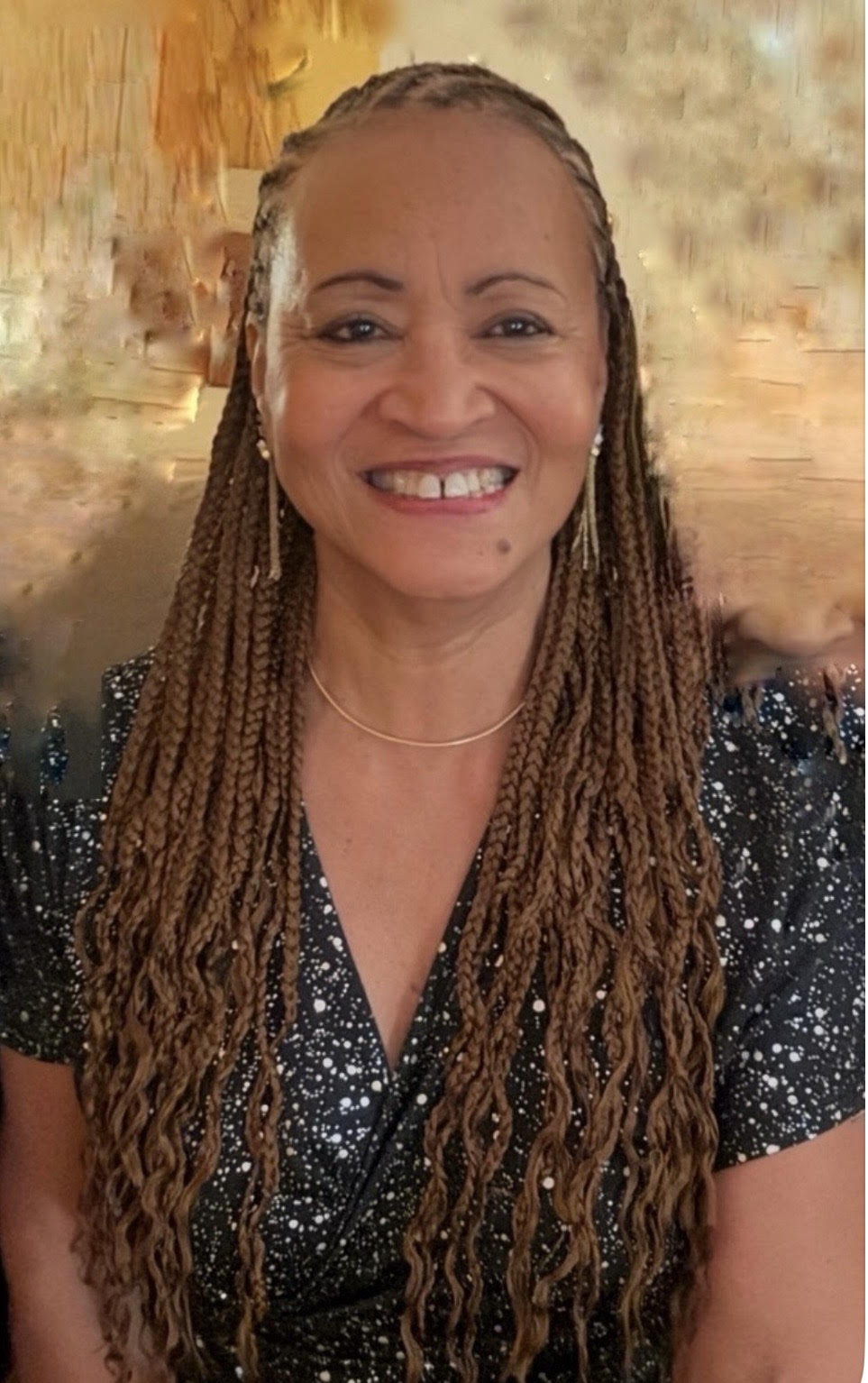
When I heard Dean of Students Mary Custard was retiring after decades of service to ARHS, I was so happy for her; however, I was also sad for ARHS, knowing how massive her contribution has been to students, staff, and programs here. I met her through my participation in MSAN (the Multicultural Student Achievement Network) and was grateful for the chance to travel with her and other MSAN scholars to DC for the annual conference. Many of my friends spoke fondly of their time in People of Color United, a club she advises, and I have heard of the numerous field trips and activities she has guided. Mary Custard is iconic– someone who will leave a lasting legacy at ARHS. She has worked her whole career to advocate for social justice, inclusivity, and joy. I sat down with her in her office to ask her to reflect on her time at ARHS and to offer a glimpse of what she thinks her future will hold.
Lily: Ms. Custard, we’re going to start from the beginning! Where did you grow up? Where did you go to school? What did you study?
Mary Custard: Well, my father was in the service, so I was born in Tokyo, Japan. I started school in Great Britain. And then, when my father was ready to retire, he chose Springfield, Massachusetts. My parents divorced when I was in elementary school, and I mostly lived with my mother, so I did a lot of my growing up in Springfield. When I was in the 11th grade, I moved to Boston to live with my father, stepmother, and little brothers.
Lily: Nice. Does that mean you have Japanese citizenship because you were born in Tokyo?
Mary Custard: I don’t now. I was naturalized as an American citizen.
Lily: Interesting. Where did you go to school?
Mary Custard: My schooling began in Great Britain and continued in elementary in Springfield. I attended Commerce [in Springfield], then I attended and graduated from Dorchester High [in Boston]. My high school counselor was not helpful with the college process. I was a first-generation college student; my parents didn’t really know a lot about college. I had friends who were attending UMass, and I wanted to be someplace where I knew people, so I chose UMass.
Lily: What did you study?
Mary Custard: I actually studied physical education. I’m a certified phys. ed teacher. And while working here at ARHS, I also earned my principal certification.
Lily: Why did you become an educator?
Mary Custard: At first, I thought I was going to be an art major because I really enjoyed art growing up. I had always been an athlete & loved sports, so when I got to UMass, I decided I wanted to do physical education.
Once I earned my diploma, I knew I wanted to work with young people, but not as a classroom teacher. I did my student teaching here in the Amherst schools, and I enjoyed it, but it helped me decide that that wasn’t my path.
In other jobs I had, I had worked with preschoolers, which I really enjoyed. I actually thought maybe I would stay with the younger kids. But then I got into residential counseling, and I worked for Tri-County Youth, which had homes for kids who were having a lot of challenges. And I did enjoy that, too, working with the kids and making a difference in their lives and their families’ lives, helping them to hopefully transition back to their families.
And then, while I was doing that, I worked as a Teacher’s Assistant (TA) at UMass and a Residence Director while I worked on my master’s.
In my master’s courses, I met lots of different people. Many were educators in the area. And so, when the new wing [at ARHS] opened in 1997, one of my former classmates from my master’s program encouraged me to apply for the dean’s position. He remembered me from our UMass course in multicultural education, because that’s what my master’s is in, multicultural education. And I thank the principal who hired me, Scott Goldman.
At that time, we had over 1,500 students, and I was the only dean. And I did not have clerical support. So it was a lot. A lot, a lot. And we didn’t have the software systems that we have now to maintain and track data. I learned a lot over the years from the many different administrators that I worked with
Lily: How many principals have you worked with since ’97?
Mary Custard: So many. I’d have to look back and count. Some of them didn’t work out well. But mostly, I worked with administrators who I learned from and who supported me. And I’m grateful for everything that I was able to learn from them to make me a better dean and to work better with young people.
Lily: What other aspects of being a dean did you love?
Mary Custard: Actually, being a dean is not something I would say I loved, because it can be challenging and difficult. You’re dealing with students who make mistakes or who are having their worst day. And sometimes their parents are also having their worst day. So it can be challenging.
But watching them grow and mature and learn from their mistakes is uplifting. A number of alums whose behaviors were challenging in high school, when they come back, they thank me for listening to them, for understanding that’s not who they are or were. And so that part of it I enjoy.
And I would say being able to be an advisor to different organizations, student organizations, has really balanced out the more difficult parts of being a dean. Because then I’m working with students who want to spend time with me, learn things, and have new experiences, and all of that.
Lily: That makes sense. And it’s also a perfect segue to my next couple of questions! What have you loved about your individual positions as advisor for these clubs? We have MSAN (the Multicultural Achievement Network); we have POCU (People of Color United); we have the Senegal-Gambian Exchange Program. Give me one thing from each of those that you really appreciated.
Mary Custard: I was also an advisor to other groups before these three. These are the most long-standing. When I first came in, they needed a senior class advisor, so I was a co-senior class advisor for the graduating class of my first year. I was learning everything while doing it. It really challenged me to be a multitasker and be able to balance things.
Then, students came to me who wanted a drill team advisor. I don’t know if they thought I’d be a good choice or if they couldn’t find anyone else. I don’t know how I ended up being the drill team advisor! And that was a really great experience because it’s very similar to our dance team now, and they were really into it. So for a few years, we did have a drill team, and then it kind of fell off. I learned how to raise money to buy uniforms, because they weren’t under athletics at that time; they were just a club. That was my first full experience of being an advisor. And I enjoyed it. Advising is extra work, but it’s worth it to see kids being happy and doing something that benefits them and the school.
As for POCU, I knew about it because my daughter also went to Amherst Regional High School, and she was in POCU. And I knew Karen Brown, who was the former advisor before me, and Naimah Muhammad, one of the counselors who had been an advisor.
So when I came in, I was an advisor-in-training with Ms. Brown. If she needed assistance or support with doing some things with POCU, I would help out. And then, when she was about to leave, she asked if I would take it over, and I did.
And then, after a year or two, I asked Liz Haygood to be a co-advisor with me. And so then we did that together until she retired. I was doing it alone for a couple of years until this past year, when I asked [ELL teacher] Rosa Gomes to co-advise with me, as I was contemplating retirement.
I am happy to share that joining Rosa Gomes as co-advisor to POCU [Special Education and English teacher], Marita Banda. And I will be acting as a consultant to them. I’m happy to be able to pass the torch to two people who I think will do a great job as advisors to POCU.
As far as MSAN goes, I’ve asked Meka Magee to take it over, and I’m hoping to remain a co-advisor to transition her in because no one really knows MSAN the way I know MSAN. And there’s a lot to do.
So she has agreed, and hopefully the district will allow me to come in to be a co-advisor, at least for a few years, for the transition and to try to share all the things that she’ll need to know to be an MSAN Advisor.
As for Senegal-Gambian Scholars, we’re not really sure [about the future] because two of the founders, who are advisors, have been retired for over a decade, and they were still doing it. And I told them, “I can’t do that.” I love the program. I don’t want it to fade away. So we’ve been discussing who might be able to work and take over the program and keep it going. And even if, unfortunately, the exchange part doesn’t happen, maybe we can be like Schools for Africa and raise money to send to the village in The Gambia to help them improve the preschool or the high school supplies. They need everything. I will maintain relationships and support, especially in the village, because they need so much and they don’t have a lot of resources.
I will also maintain my relationships in Senegal, but they’re more of a middle-class school and not as needy. In fact, they have their own exchange programs in other countries, so I’m not so worried about them. I do want to maintain my friendships and relationships there, as it’s an amazing program.
And I know that all the students who have gone through it have lifetime memories of that exchange, especially in the village. Even though the village doesn’t have all the privileges and things that we have here, almost all of the students who go say that it was their favorite experience rather than being in the city, in Dakar. I think it’s important that we try to keep that going.
Lily: Beautiful. Let’s transition a little bit and talk about some highlights or things you will always remember from your time at ARHS.
Mary Custard: I think one of my favorite things is the last few weeks for seniors, especially prom and graduation. Watching you all walk across the stage is one of my favorite things. And, of course, advising my groups and watching the fun that we have in the different places.
I think one of my favorite things is how much the community supports us. When I say, “We need money to go do this,” the community responds. After Hurricane Katrina, we took a vanload of POCU students to New Orleans. Ms. Haygood and I drove them straight there and back during a vacation week. But we raised the money to rent the van and pay for gas through community donations. The school gave us nothing.
[I love] how generous and open our community is to supporting things that benefit our students, and the outside community, I think, is one of my favorite things about being here.
I know I’m lucky. I have lots of friends who are educators in different kinds of schools. Urban schools can’t do most of what we do. And it’s unfortunate that our students don’t understand the privilege they have in being in a school like Amherst Regional High School, because it is very privileged compared to many urban schools.
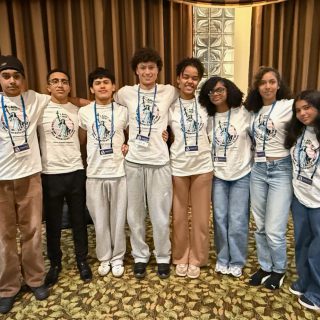
[I love that] I’ve been able to get the resources to travel with students. With MSAN, I enjoyed taking students who have never been on a plane to a campus they probably won’t ever see again, being in a room with a majority of Black and Brown kids coming from a predominantly white school, and seeing the joy on their faces. And I’ve had a lot of support from [not just community] but my colleagues here at Amherst, and I know I’m lucky.
During COVID, when we were meeting on Zoom, it was my birthday, and the whole faculty sang “Happy Birthday” on Zoom. You know it doesn’t stay synchronized, so it sounded awful. But it was hilarious. One of the funniest things: so sweet, but just hilarious.
I think how we rebounded coming back after COVID—it was hard. Very hard. But we did a pretty good job getting our students back in school and reteaching them social skills because some of them were off the chain.
But [we did so many things], especially for the seniors—we got those lawn signs. I made up a whole map, and my colleagues and I delivered them to students’ homes. If they were home, we took pictures with them. We also had the lawn signs on the Amherst Common. We did as much as we could to normalize the joy of graduation, and I think we did a good job with that. It wasn’t the same, but we did the best we could.
I think just watching students be successful and happy has been my favorite part of being in this job. And watching students support each other. There were challenging days, but I know I’m so lucky. I’m happy to be in a community that has been so supportive.