Yiddish Book Center’s new permanent exhibit an extraordinary collection
-
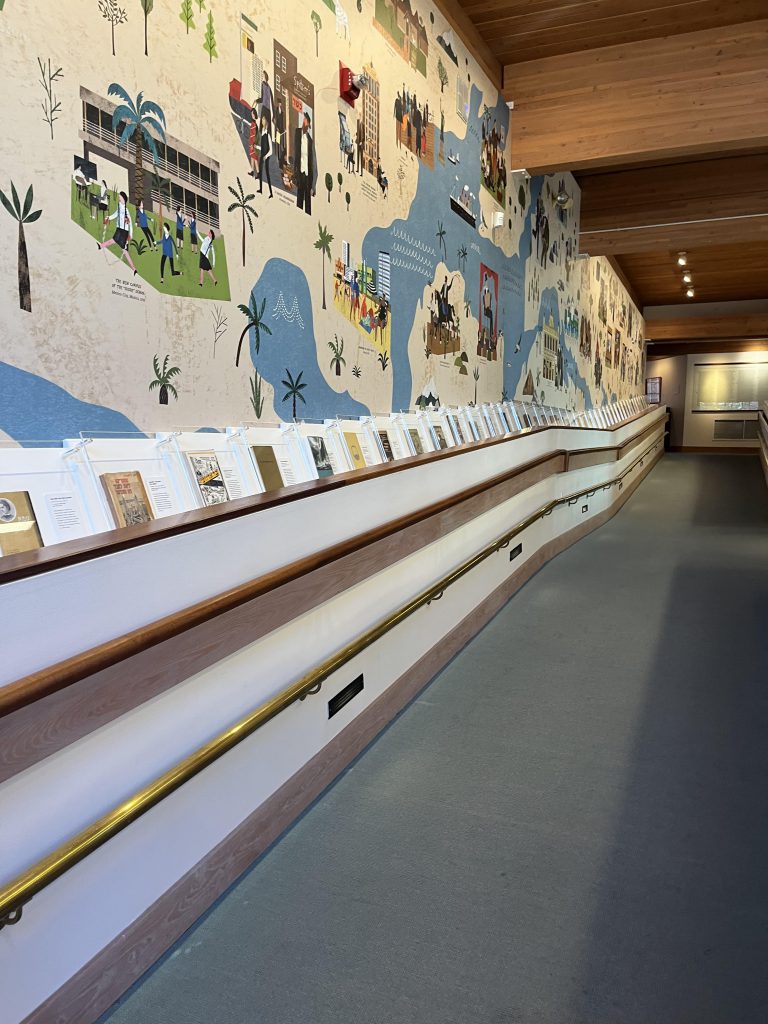 A mural of a world map with descriptions of the books on the shelf below. (Cora Chalif)
 -
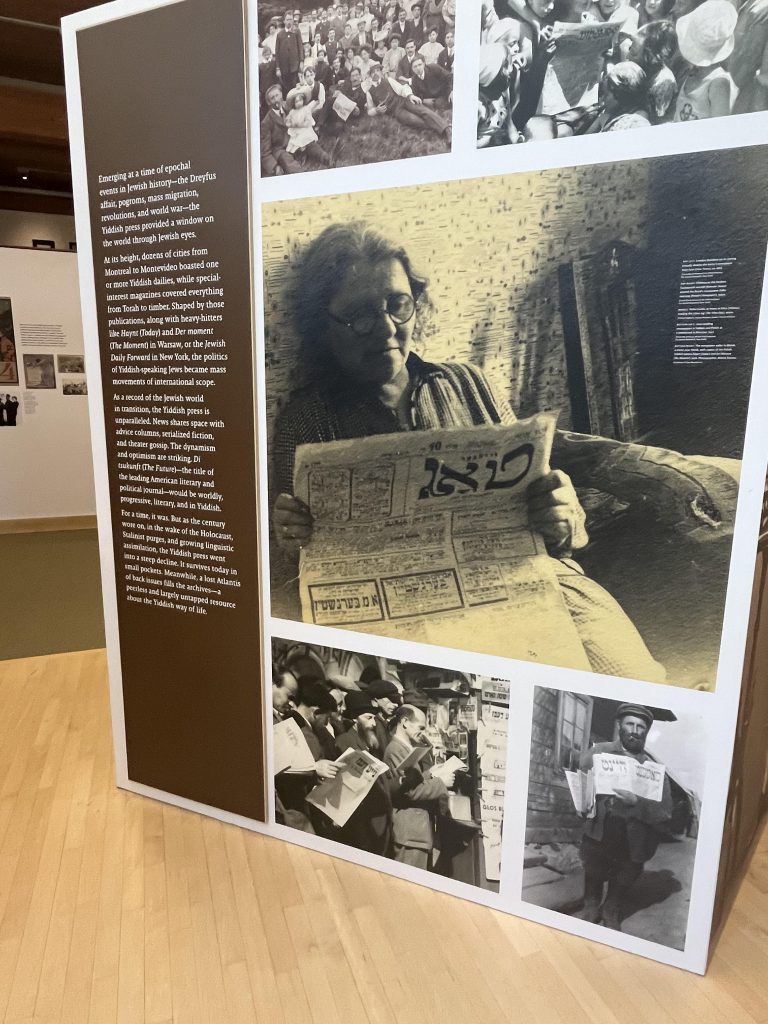 PIctures of book collections, artifacts, and gallery items at the Yiddish Book Center in Amherst (Cora Chalif).
 -
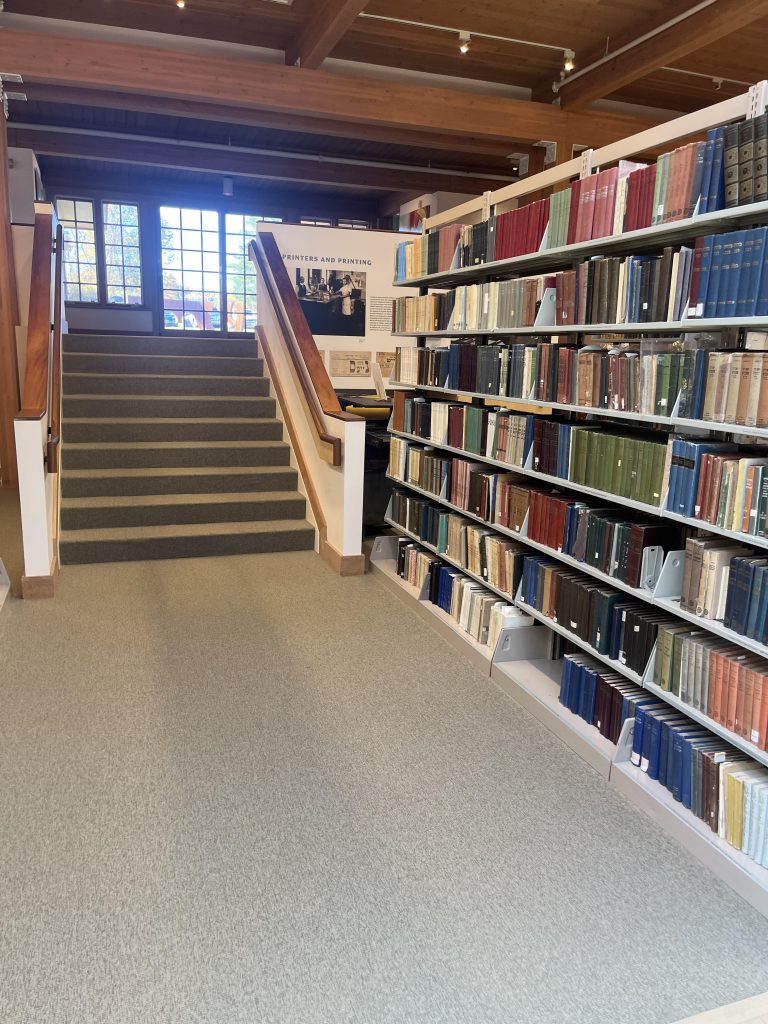 PIctures of book collections, artifacts, and gallery items at the Yiddish Book Center in Amherst (Cora Chalif).
 -
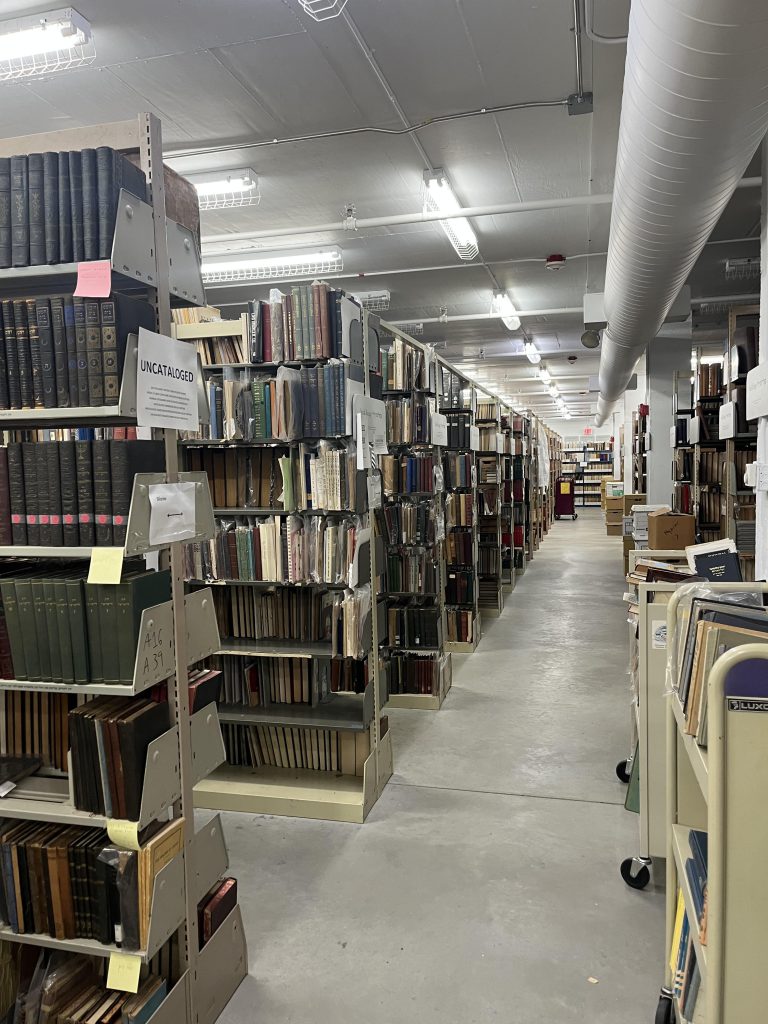 PIctures of book collections, artifacts, and gallery items at the Yiddish Book Center in Amherst (Cora Chalif).
 -
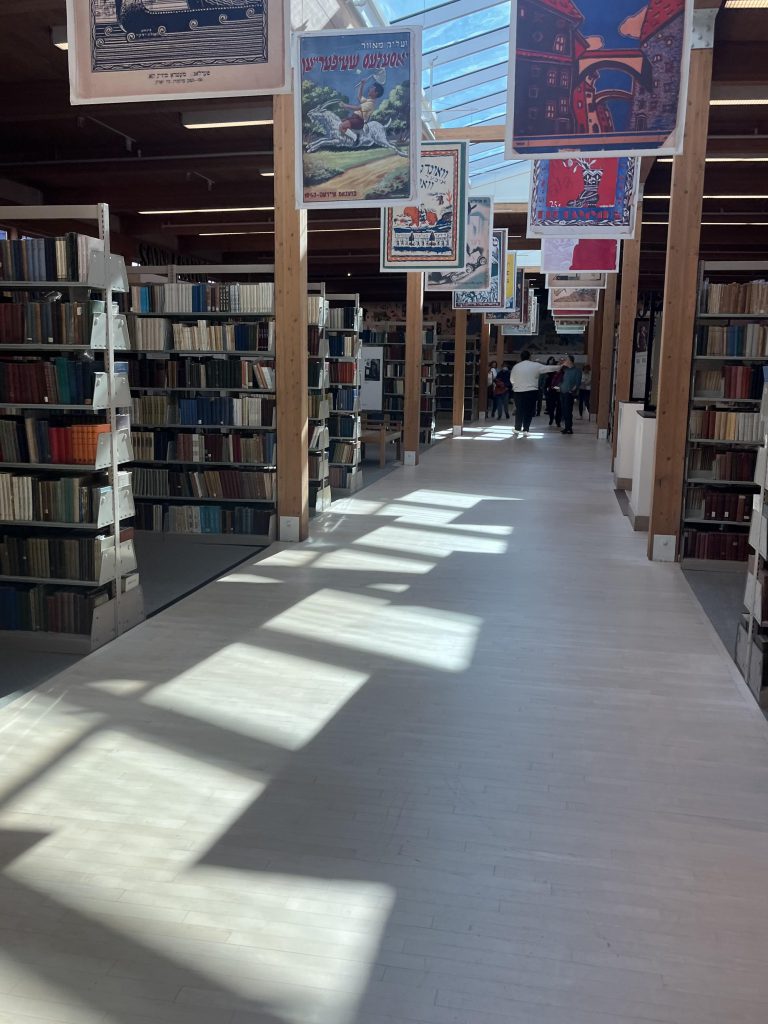 PIctures of book collections, artifacts, and gallery items at the Yiddish Book Center in Amherst (Cora Chalif).
This fall, on October 26, 2025, the Yiddish Book Center at Hampshire College in Amherst, Mass., held an Open House, running from 10 a.m. to 4 p.m. The event was held to celebrate the second anniversary of the opening of one of its now permanent—and most prominent exhibits—called “Yiddish: A Global Culture,” showcasing “the musicians, theater artists, writers, and graphic artists who are creating new works in Yiddish today,” according to yiddishbookcenter.org.
The Chief Curator of the exhibit was David Mazower, a research bibliographer and editorial director at the Yiddish Book Center, and the Project Director was Lisa Newman, director of publishing and its public programs.
According to the Yiddish Book Center website, in the late 19th and early 20th century, as millions of Jews emigrated from Europe, they brought “Yiddish language and culture to the United States, Australia, South America, South Africa, Israel, and beyond.”
This exibit aims to present the “extraordinary and inspirational individual stories [of these people]: the rebellious teenager who had to leave home to pursue her literary dreams; the lesbian love affair on stage that outraged conservative opinion; the workers who spent their hard-earned cash to build up a pocket library of world culture; the literary couple who set sail and couldn’t stop travelling; the shy writer who fell in love with a visiting actress; and the Yiddish pulp fiction detective whose exploits entranced a future Nobel Prize-winning author.”
Even though I am a member of the Jewish community, I myself had never stepped foot inside the Yiddish Book Center. Upon entering, I was immediately excited to be immersed in its resourceful, active, and communal nature. And as a speaker read an excerpt entirely in Yiddish, I was overcome by the emotion and intensity of the language.
Several visitors gathered around, some behind the railing overlooking the vast space below, others walking down the ramp towards the speaker, and the majority absorbing the scene directly in front of the speaker.
The ramp, almost immediately on the viewer’s right, showcases an expansive mural that serves as a type of world map. Spanning all the way down the ramp are illustrations and descriptions of hundreds of books filling the shelves below, many of which have been translated into Yiddish, while others were written in Yiddish to begin with.
After exploring the exhibit at the Open House, I had the pleasure of connecting with the Center’s Communications Coordinator, Grisha Leyfer, to learn more about the significance of the exhibit itself, this diverse collection of books and other artifacts housed at the Yiddish Book Center, and Leyfer’s job.
“One of the most exciting things about working at the Center is seeing how people use resources,” he said, noting that being in such “a hub of activity” makes “it absolutely impossible to be anything but optimistic about the future of Yiddish.”
Leyfer explained how the sole purpose of the exhibit is to “tell the story of Yiddish in a way it’s almost never told.” He claims that approaching Yiddish as a global culture immediately challenges many long-standing prejudices and opens the viewers’ eyes to the true complexity of Yiddish culture, which is much broader and more diverse than one would imagine.
Even more important is the message that this piece of artwork embodies: “the geographic diversity of the Yiddish world.” It challenges the undertone of isolation that is historically and commonly assumed of the Yiddish population, showing, rather, how the spread of Yiddish has created far more connection than solitude.
Leyfer elaborated on the multilingual aspect of Yiddish populations, noting that as the Ashkenazi diaspora spread further throughout the world with time, Yiddish began to serve as a newly shared language. It established “a strong connection between thousands of people on different continents, who had started reading each other’s newspapers, books, and letters.”
Newspapers, especially, played a major role as a main source of media during this time period, as there was no social media or online communication. Although Leyfer said, “the dominance of the newspaper was not unique to Yiddish.”
The period between 1830 and 1930, often referred to as the Golden Age of Newspapers, included the flourishing and major uprising of newspaper media in Yiddish, English, and all around the world. Ink on paper was one of the most reliable ways of spreading important global events, he said.
This spread of media was activated by an increase in affordability, which in turn sparked accessibility. Newspapers went from costing a few cents to only one, which at the time was a major turning point.
Examining Yiddish literature more closely reveals that the voices of women as well as members of the LGBTQ+ community were included early on. Many aspects of society that we consider essential nowadays began to truly take root in the 20th century.
Leyfer explained that women “are central not just to the development of the Yiddish culture, but to the creation of the culture and norms that we all take for granted today.”
Throughout “the history of Yiddish publishing, women have been key drivers,” he said. Additionally, queer Yiddish-speaking women led the way in labor protests, with many influential and historical pieces of Yiddish writing pouring out from sweatshop workers and sanatorium patients.
Literature played a major role in ensuring the light and connection at the core of Yiddish culture would never fully extinguish. Indeed, this was founder Aaron Lansky’s mission.
According to the Center’s website, Lanksy, who studied modern Jewish history at Hampshire College undergrad, “was a graduate student in Montreal in the late 1970s when he discovered that large numbers of Yiddish books were being discarded by younger Jews who could not read the language of their parents and grandparents.”
Lansky “took what he expected would be a two-year leave of absence from graduate school and by 1980, founded the Yiddish Book Center, securing a main base for all the Yiddish literature he could find. The books were initially housed in a warehouse in Holyoke before being moved to Hampshire College, his alma mater.
Since then, the Center has saved almost 2 billion copies of Yiddish books. The Center receives more than 5,000 visitors per year, due to its designation as a major location dedicated to preserving the remnants of Yiddish culture, literature, and history.
Lansky, whose children attended ARHS, served as the Center’s president for 45 years and stepped down in June 2025, continuing now as senior advisor.
Leyfer elaborated on the feeling of trust and security that the Center builds within its community and people: “People trust us with their books. They trust our…history project with their life histories,” he said.