On eve of resignation, Talib Sadiq reflects on tenure as principal
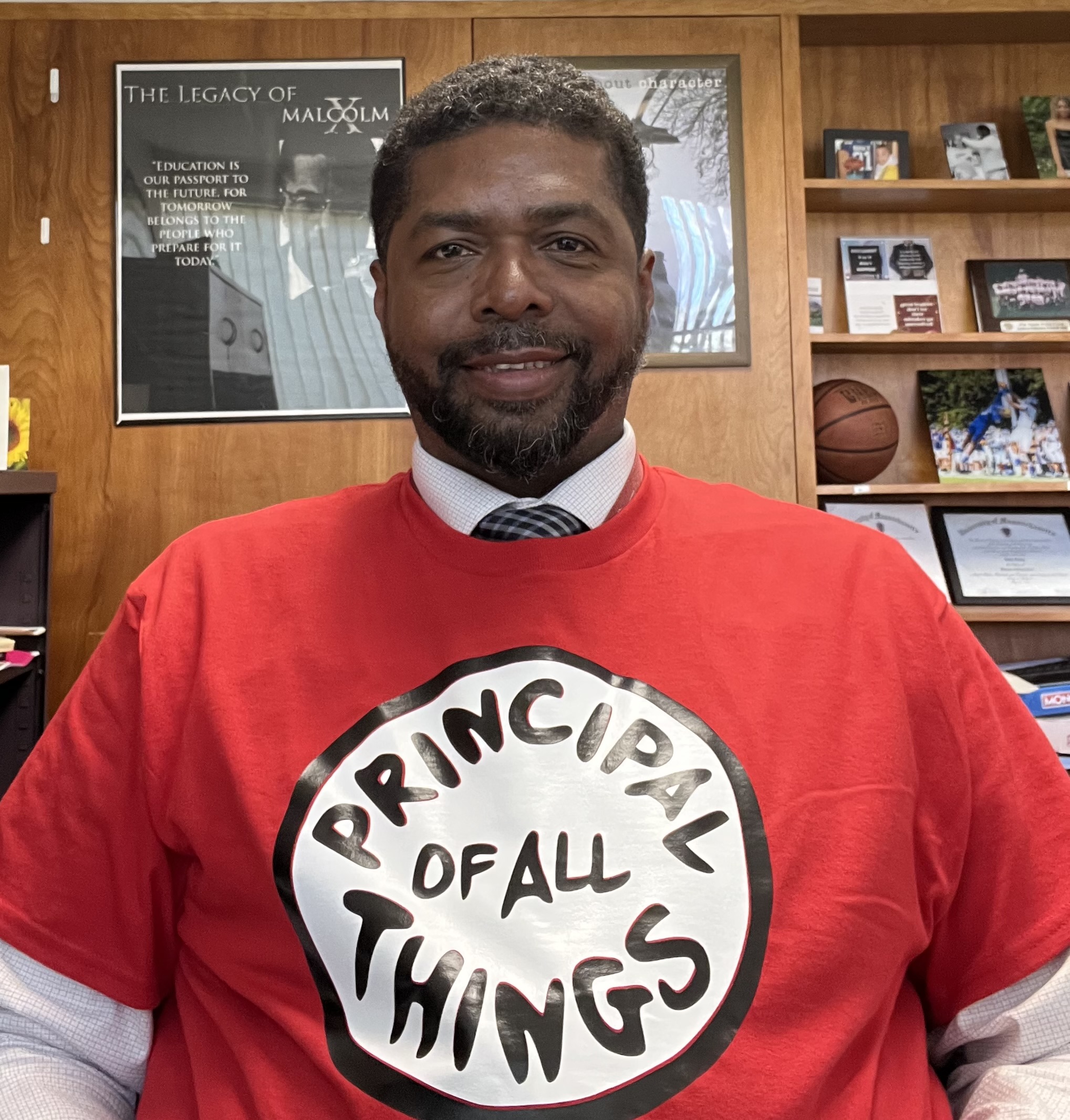
After six years as principal of Amherst Regional High School, Talib Sadiq has decided to step down. His departure marks the end of a tenure shaped by steady leadership, adaptability, and a consistent focus on students.
Sadiq did not originally intend to become a principal. He began his career in education as a school counselor at Amherst Regional Middle School while he was simultaneously enrolled in a graduate program at UMass, training to become a school administrator. He assumed he would eventually leave the district to lead a school elsewhere.
However, in the spring of 2018, an assistant principal position opened at ARHS, and he decided to apply, was interviewed, and accepted the position.
In 2018, ARHS was undergoing rapid leadership changes. Former Principal Mark Jackson, who had led ARHS for 15 years, left in the fall of 2018. Assistant Principal Miki Gromacki held the interim position for the rest of that school year, and Gene Jones was hired the following year as principal, but left after only one year. These sudden changes ultimately led to the next interim principal position falling into Sadiq’s hands, which later became permanent.
As principal, Sadiq emphasized accessibility and respect in his leadership.
”I’ve tried to be the type of leader that people feel they can come to with whatever it is: ideas, concerns, or questions,” Sadiq said. “They may not always get the answer they want, but they know that I’ll deal with them respectfully and reasonably.”
He prioritized creating a safe space for all voices to address important issues and strengthen the school community.
The beginning of Sadiq’s tenure coincided with the pandemic, a period marked by a shift from in-person to remote learning.
”I was just trying to support everybody and help them make that transition while still providing a quality education, and to make sure teachers felt supported and capable of doing their jobs without extra stress,” Sadiq said. “That year was really about helping everybody get used to being back together, rather than implementing new rules or big changes.”
This focus on maintaining balance within the school helped ease the return to in-person learning for both students and staff.
Sadiq was also very open about the challenges facing the school. Perpetual budget constraints, declining enrollment, and increased student needs have made it difficult to maintain programs and resources.
”I think we’re in a mental health crisis,” Sadiq said. “That’s one of the side effects of the pandemic.” He pointed out that these issues were not unique to ARHS but part of a larger problem in public education.
”That tells me public education isn’t being treated as a priority,” Sadiq said.
Ultimately, Sadiq’s departure is due to the constant demands of the role. “I just don’t feel like I can give the job the energy it deserves anymore,” Sadiq said.
He described the position as requiring ongoing emotional and mental energy, which has become increasingly hard to sustain. Moving forward, he hopes to return to a school counseling role, where he can work more directly with students, which he believes is more sustainable.
Looking back, Sadiq reflects on what he wishes had been further developed at ARHS, such as vocational programs, innovation pathways, financial literacy, and more hands-on learning opportunities.
Sadiq also offered advice to the next principal:
”Don’t try to come in and make too many changes too quickly,” Sadiq said. “We have an amazing school.”
His advice? “They should really get to know the culture of the school and the people before trying to make big changes.”
Despite the challenges, Sadiq described his time at the school as “bittersweet,” shaped by strong relationships with students and staff. ”I hope they remember that I cared about them,” Sadiq said.