Amherst detective describes the ins and outs of his job
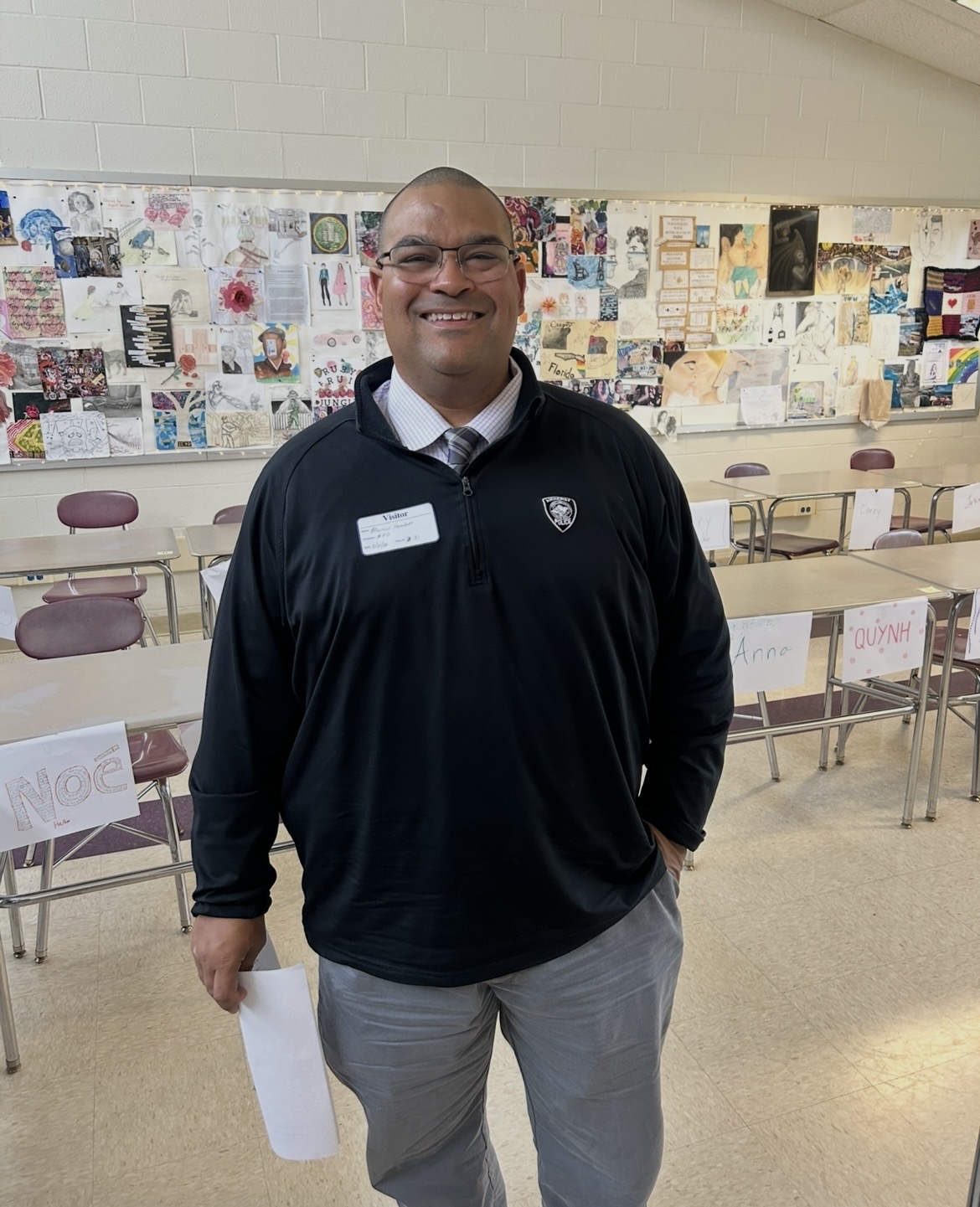
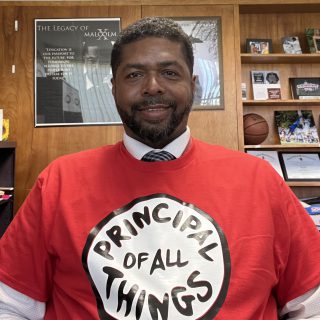
Marcus Humber has been a detective with the Amherst Police Department for over two decades. While he is currently the liaison to the court system for the APD and the liaison to the Center for Women and Community on the UMass campus, he was also awarded a Letter of Merit in 2025 from the department for investigating an Amherst resident on charges of possession and distribution of child pornography in 2019 and 2022.
Due to my interest in true crime and in detective work, I reached out to Humber to see if he would talk to The Graphic about his work.
Oliver: What’s your name? And what is your job description?
Marcus Humber: My name is Marcus Humber, and I’m a detective.
As a liaison to the court, I am basically the conduit for all paperwork that’s generated from the Amherst Police Department that goes to the courthouse. I’m responsible for conducting civil motor vehicle hearings. So if someone gets stopped and gets a ticket, I’m the one who conducts the hearing at the first level. If somebody gets summoned to court or someone gets charged with a crime, I conduct those hearings. I actually had about 10 of them today. They stack them up. It gets busy.
Any time someone is charged with a crime, we have to provide everything that we have as evidence through a discovery process. And the district attorney’s office sends us a memo of what they’re looking for, and I have to gather all of that, and then provide it to the district attorney, so they can provide it to the defense. This ensures a fair process for everyone involved.
Now, as for being a liaison to the Center for Women and Community, any time there’s a domestic assault or a crime of a sensitive nature that comes in, I review that report, and I provide it to an advocate from the Center for Women and Community. So we can follow up with the individuals involved to help provide them services, to help them through whatever process they choose: either the criminal justice process, the healing process, or both.
Oliver: Where did you grow up and go to school? How did you decide to become a police officer, and what made you want to be a detective?
Marcus Humber: I grew up in Holyoke, Mass., and I still live in Holyoke. I went to Holyoke High School. I graduated from Stonehill College in 2003 and started working right away at Babson College’s Department of Public Safety. And two years later, I started at Amherst. Along the way, I went to Lasell University and got a master’s degree. I studied criminal justice in college; my undergrad was a bachelor’s in criminal justice, and my graduate degree was in crime prevention and advocacy, both of which I use every day.
According to my mother, I’ve always said, since I was three years old, that I wanted to be a detective. Why? I have no idea. I have no one in my family who is in law enforcement. I’m the only one. I wanted to be a detective because I’m curious by nature and like to try to figure things out.
Oliver: What’s the difference between your job and that of the other police officers in Amherst?
Marcus Humber: The patrol officers, they’re the ones that are out in the black and white cruisers, driving around, answering calls, stopping cars. They’re the front line, the backbone of any police agency, patrol. Everything that comes in usually starts with them. And then we pick up investigations that are either too in-depth, too complicated, or that we just have more training to do. So we’re more analytical about certain things than patrol has time to deal with.
Oliver: Did you start on patrol?
Marcus Humber: I did. I worked patrol for 10 years. In 2015, I moved to the Detective Bureau.
Oliver: What is a typical day like for you?
Marcus Humber: So my day usually starts earlier than anyone else, because if there’s anything in court, I have to get it ready. I usually start at about quarter of 7 in the morning. And I have a court box, and I take everything out of the court box, and I review it for accuracy. Anything that has to go to court, I scan into the computer and send it to court.
Then I review the daily log, which [covers] any call that comes into the station. So if I stop a car, that is logged into what we call “a call.” I review that for anything that I might have to send to the Center for Women and Community. I review it, download it, and send that off to them, and then I will follow up with a phone call later on if there’s something that needs to be discussed.
And then I usually go to court and see what’s in my mailbox there. Usually, there’s paperwork there that I have to take and sign, and swear to, swear that it’s a true testament to the facts. On a day like today, I had to do hearings. So I had 10 different cases where I had to sit in front of the clerk magistrate, and I read the report that was generated by an officer to substantiate probable cause that a crime may have occurred. Then the clerk makes a decision about what’s going to happen. And then I come back to the station, where I work on discovery for the remainder of the day. So, there’s a lot of paperwork on a typical day.
Oliver: What do you like or love about your job?
Marcus Humber: I love the hours, because I’m one of the few [officers] that’s Monday through Friday, so it’s great for family life. And I like working with the Center for Women and Community; it’s very rewarding to help people, to [be a] voice for people that can’t or are unwilling to speak for themselves, to advocate for them, and [help] in any direction that they want to go, whether it’s services to feel whole, or to prosecute a case. We follow them from reporting through the whole process. So it’s not just pass off, here you go. It’s, we’re here next to you, and we’re going to pick up someone else, and it’s a team effort.
Oliver: What is one of the greatest challenges in the job?
Marcus Humber: Getting people to report. We know that there are things happening, and unfortunately, people are intimidated, scared, or for whatever reason, don’t report. So one of my goals and challenges is to try to advertise to people that we are here, willing to help, ready to help, and there are certain ways and avenues that we can ensure the safety of individuals, of vulnerable populations, so they can report to us and feel comfortable doing so.
Oliver: How do you handle stressful situations on the job?
Marcus Humber: We work on things like getting tunnel vision, where you’re stuck, and learning how to snap out of that. We work on box breathing, different techniques, where if you’re stressed, you can step out of it, you know, breathe your way out of it, or step aside, and someone else can step in. We have a peer support program where if things get too hectic or someone recognizes someone’s in a stressful place, we can go up to them and say, “Hey, let’s have a chat.” We have avenues in place to get people help before it turns into something more serious.
Oliver: What motivates you?
Marcus Humber: My family. You know, my kids are getting older, and I want to be a positive role model for them. And not necessarily a police officer role model, but as someone who gets up, goes to work, is there to help, to support them, financially and emotionally. I have two girls, and they motivate me.
Oliver: What kind of crime have you seen in the area that you patrol or investigate?
Marcus Humber: Well, unfortunately, I’ve seen just about every crime that there is. Since I’ve been here, we’ve had, unfortunately, one murder, which, in 20 years, is not a bad average, but I wish it was zero. In the unit that I’m in, with the Center for Women and Community, we deal with a lot of sensitive crimes, domestic-related, and sexual assault related. A lot of fights, underage drinking, driving under the influence, and minor motor vehicle [accidents]. The most common Thursday through Sunday [calls] are alcohol related.
Oliver: What’s the most satisfying case that you’ve ever worked on?
Marcus Humber: One involved a child pornography arrest. We got a tip from NCMEC, the National Center for Missing and Exploited Children. There was an image on a computer that was downloaded from an address in the town. So I had to write a warrant to gather all the electronics from that house and review it. [I learned] the individual’s backstory and how long he’s been doing this. Being able to get him to confess, really, was something I never thought would happen.
Then he did it again, and I got the tip again, and now he’s served three years in jail. Unfortunately, there’s quite a bit of those cases.
Oliver: What’s the weirdest case that you’ve been on?
Marcus Humber: I’d say the weirdest case is, we walked into a Jell-O wrestling fight one night, one Saturday night. There was a Jell-O wrestling party at one of the college houses.
Oliver: So did you break it up?
Marcus Humber: Well, yeah, we did. It was interesting because everyone was screaming, having a good time, laughing, and then they see us in the corner, and they’re like, ‘Oh my God.’ And they got all modest and stuff.
Oliver: How do you solve difficult cases?
Marcus Humber: By working together. My expertise is different than someone else’s. So, we have meetings every Monday, and we come together, and there might be something that’s holding us up. Or something that someone else might know more than I do. We ask [each other] for help. There’s constant communication.
At the moment, we don’t have the ability to download devices, so we use Northampton PD’s, because their turnaround time is a lot better than state police. But we’ve needed help interpreting certain languages before, so we’ve contacted the FBI out of Springfield, and they provided us with interpreters. So we lean on other agencies to help with the difficult cases.
On a given day, there are usually at least three of us in the office during the day. So it makes it enjoyable. I prefer working with a partner.
Oliver: When you’re watching a detective show, do you try just watching it, or do you just try to solve the crime?
Marcus Humber: Well, I’m usually like, Oh, come on, it’s never gonna happen, [solving it] in 45 minutes. You know, they pull a fingerprint off a doorknob that everybody in the world has touched in the last hour; this is not realistic. But I do try to sit there and analyze things and see if I saw that coming.
Oliver: What kind of skills do you need to be a good detective?
Marcus Humber: Attention to detail and writing skills come in handy. Patience, which can be hard, [as] sometimes talking to individuals, no one ever really walks in or just tells you what’s going on. You have to be able to, I guess, befriend people that you wouldn’t necessarily befriend, so they think that you’re on their side, so they will tell you certain things. And then you walk out of the room, and think, I can’t believe I heard or said some of those things.
Oliver: What are your strengths and weaknesses, and how do you apply them to your job?
Marcus Humber: One of my strengths is communication. And I’m very good at finding things digitally, analyzing digital downloads. If someone needs to be found, they usually come to me to find them. If there is information that someone needs, they usually come to me to find it. We have a lot of databases, and even if people aren’t on social media, they’re on social media somewhere. Because there’s a picture of a picture of a friend who did something, so usually you [can go] down a rabbit hole.
Weaknesses? As much patience as you need, sometimes I could probably slow down a little bit.
Oliver: What is a misconception people have about your job?
Marcus Humber: That we can solve everything quickly. And that if we send something to the lab, it’s gonna come back in a day. We send stuff to the lab that doesn’t come back in six months. So depending on what it is, turnaround for lab analysis can take forever.
Oliver: What are your hobbies?
Marcus Humber: My hobbies are basically spending time with the kids, watching movies, and traveling. I love traveling. I like sports.
Oliver: What’s your favorite place to go?
Marcus Humber: Disney World. It’s just a fun place to go. I would go there once a year if I could, if my wallet would let me. And I love cruises.
Oliver: Who is in your family?
Marcus Humber: My wife is a tech ed teacher in Somers, CT, and we’ve been married for 18 years. We have a 15-year-old daughter and a 12-year-old daughter. They both go to school in Somers with her. Both my kids are swimmers, and my wife was a swimmer; she swam in college. We live in Holyoke. We’re very busy people. I’m very close with not only my immediate family, but my extended family. I grew up with my entire family living within about three miles of each other.
My family is a mixed family. So my youngest looks like me, my oldest looks like my wife, which is pale skin, blue eyes, and red hair. My dad’s African American, and my mom’s white. People mistake me for being Spanish or Puerto Rican, but I can’t speak a word of Spanish. But my kids spent at least five or six years in a dual language school, so both of them are basically fluent. So when we travel to places that speak Spanish, I rely on them to get me through.
Oliver: What advice would you give to someone interested in pursuing this career?
Marcus Humber: It’s definitely a tough career. It’s tough mentally, tough physically, and emotionally. There are some good days, there are some bad days. So, be prepared and have a good support system. Don’t be scared to talk to someone. If you’re having a bad day, whether that’s a medical professional or a peer support person,
But I love it. I love it, I wouldn’t do anything else. It’s a challenge every day, and every day is a different day. Even though there’s kind of a routine, you also never know what you’re coming into. You never know what calls you’re going to get. You never know if it’s going to be a good day.
The only depressing thing is that no one ever calls us to say hello. You know, we [usually] see people on their worst day. So you just have to be kind of ready for that. But after 20 years in Amherst, 23 overall, I’d say it’s been great.
Oliver: Thank you for your time.
Marcus Humber: Thank you. Our doors are always open.