Massachusetts Review Winter Party featured famed Palestinian writer, musicians
On Friday December 5, starting at 7:00 p.m. many gathered into the UMass Commonwealth Honors College, eagerly awaiting the start of The Massachusetts Review Winter Party, hosted by the Massachusetts Review and Interlink publisher and founder Michel Moushabeck.
The party included live music from Layaali Arabic Music Ensemble (an ensemble Moushabeck plays drums for) and featured author Sahar Mustafah talking about her latest book “The Slightest Green.”
Throughout the evening the celebration of Palestinian culture was an evident theme, from the refreshments (catered by Mohawk Shawarma and Grill), to the melodies played by Layaali, to the stunning, culturally versed writing of Mustafah.
After a brief introduction from the editor of the Massachusetts Review, Britt Rusert, the event started. The lights dimmed and the banging of drums of Layaali came up the aisle towards the front.
Once they were all settled they kicked off the night with the song “Ana Dammi Falasteeni (My Blood is Palestinian)” most famously sung by renowned Palestinian Gazan singer Mohammed Assaf. They then transitioned into a traditional Palestinian song “Wein 3a Ramallah” and a song by Palestinian composer Ruhi Al-Khammash.
Layaali is an Arabic music ensemble started in the Pioneer Valley, but they have played in cities around the world including London and Paris. They also have played in local venues like Bombyx Center for Arts and Equity in Florence, Amherst College, and UMass.
The musical style they use most are maqams, which is a system of melodies and rhythms that are characteristic of traditional Arabic, Turkish, and Persian music. “It allows for plenty of improvisation, both individually and collectively,” said Moushabeck.
This mode of expression also allows the group to play songs from all over the SWANA (Southwest Asia and North Africa) region and still make all the pieces they play unique to them. After author Sahar Mustafah spoke and read a few excerpts of her book, the ensemble played a few more songs to close out the night. The songs they played were incredibly diverse in origin, ranging from the lush melodies of Egypt to the dynamic compositions of Turkiye.
When the introductory songs concluded, Moushabeck spoke and introduced the featured author Sahar Mustafah who was going to be speaking with Mazen Naous, Professor and Graduate Program Director of the UMass English Department.
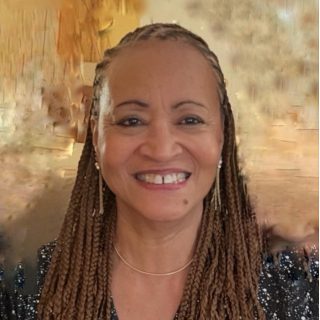
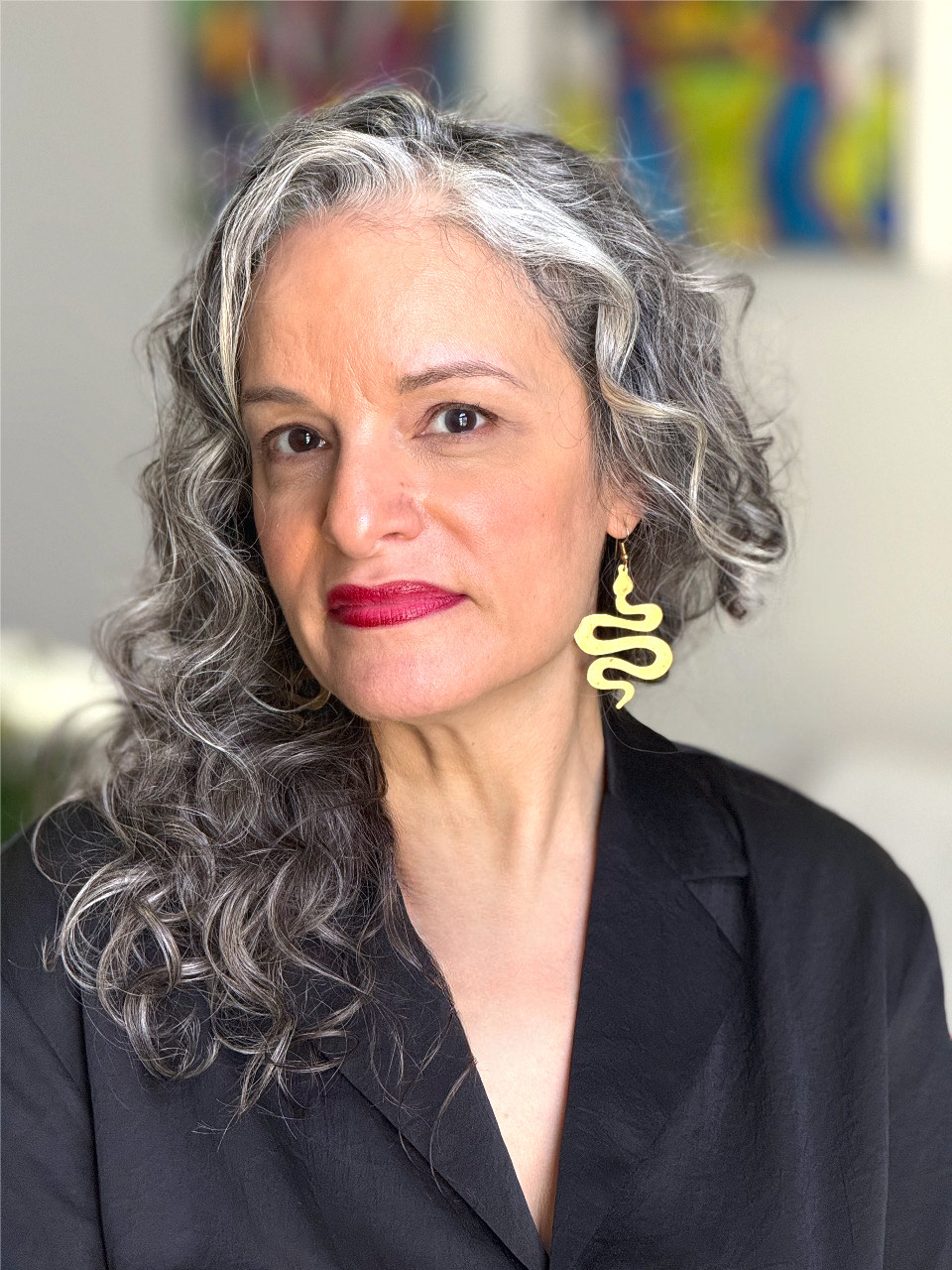
Mustafah is an award-winning Palestinian American author and teacher, based outside Chicago. Her latest novel, “The Slightest Green,” is a testament to Palestinian life and culture. The novel spans time from the Nakba of 1948 to 2007. It includes themes such as love, loss, displacement, grief, and so much more.
After a short conversation with Naous, Mustafah read two excerpts from her book. The first excerpt she read was about the character Sundus (the grandmother in the book) as a child, choosing what she could take from her home as she was forcibly displaced from Palestine in 1948.
The next excerpt she read was about the character Hafez, Sundus’ son and another main character—Intisar’s—father. In the first few chapters of the book, Mustafah reveals that Hafez is dying, which Intisar learns from a phone call. According to the book summary on Simon and Shuster’s website, “Intisar hasn’t seen or heard from Hafez for nearly two decades, ever since he abandoned her and her mother to join the resistance” and “was thrown into the notorious Gahana Prison to serve a life sentence,” so she travels to Palestine to pay her father her final respects.
Mustafah mostly writes fiction about Palestinians and Palestinian Americans because of her own personal experience as a Palestinian American and also to challenge the myth of a monolithic Palestinian/Palestinian American experience. “Though I have an affinity for Palestinian women, I’m very keen on centering Palestinian men in ways that combat dehumanization and debunk dangerous stereotypes, and which have long served as a political tool for violence against them,” Mustafah said.
But Mustafah’s character Sundus is based on her own grandmother who was from Al Khalil Palestine, a city in the south of the West Bank area of Palestine.
After reading the excerpts, Mustafah went on to talk about the importance of Palestinian voices being represented in literature, and how literature can be used to combat Palestinian dehumanization or silencing and to provide space for voices that are not being heard.
“As Israel escalates its genocide of my people, it’s absolutely critical that Palestinian writers and artists escalate our storytelling,” she said. “It is a matter of preservation. Our stories serve as documentation of our existence, as proof of our indigeneity to the land. For those of us writing from diaspora, our stories also powerfully tether us to our homeland.”
She noted that while important, this work is grueling. “On a personal level, it is an awful time to be writing, let alone performing daily tasks. There’s so much unrelenting despair to face each day,” she said. “At the start of the genocide, I felt paralyzed and unable to write anything as I grappled with the value and power of words in the face of naked aggression and extermination.”
For Mustafah and Moushabeck, the despair felt by so many in the Palestinian diaspora is combatted not just by creation of art but by events such as the Massachusetts Review Winter Party, which openly display aspects of Palestinian culture, arts, and literature.
“When the genocide is over, no matter the devastating outcome, the world will look to literature and art as a way of making sense of one of the most heinous crimes against humanity,” she said. “Tragically, if we cannot stop it, we as writers [can] carry the truth of its horrors into the future, speaking of the unspeakable.”